
WELCOME BONUS 300%
UP TO €2000 + 100
FREE SPINS
UP TO €2000 + 100
FREE SPINS
Home → Games
Casino games at Fast Slots
37 vs. 38 Sectors: What the Double Zero Costs
European Roulette, featuring 37 sectors including a single zero, offers a theoretical return to player (RTP) of 97.30%, resulting in a house edge of 2.70%. This contrasts with American Roulette, which includes both a single and a double zero, increasing the total sectors to 38. The Five Number Bet on an American wheel, covering sectors 0, 00, 1, 2, and 3, has a particularly high house edge of 7.89%.
The presence of the double zero in American Roulette significantly impacts the odds for players, especially on specific bets. While a standard European Roulette wheel has a house edge of 2.70% across all bets, the American version's double zero increases this disadvantage. For instance, the Five Number Bet on the American wheel presents a house edge of 7.89%, a substantial difference from the typical 2.70% found on European wheels.
For high rollers prioritizing lower house edges, the choice of roulette variant is critical. A European Roulette wheel, with its single zero and RTP of 97.30%, offers a consistent 2.70% house edge on all bets. This is considerably more favourable than the 7.89% edge presented by the Five Number Bet on an American roulette wheel, which includes a double zero and 38 sectors.
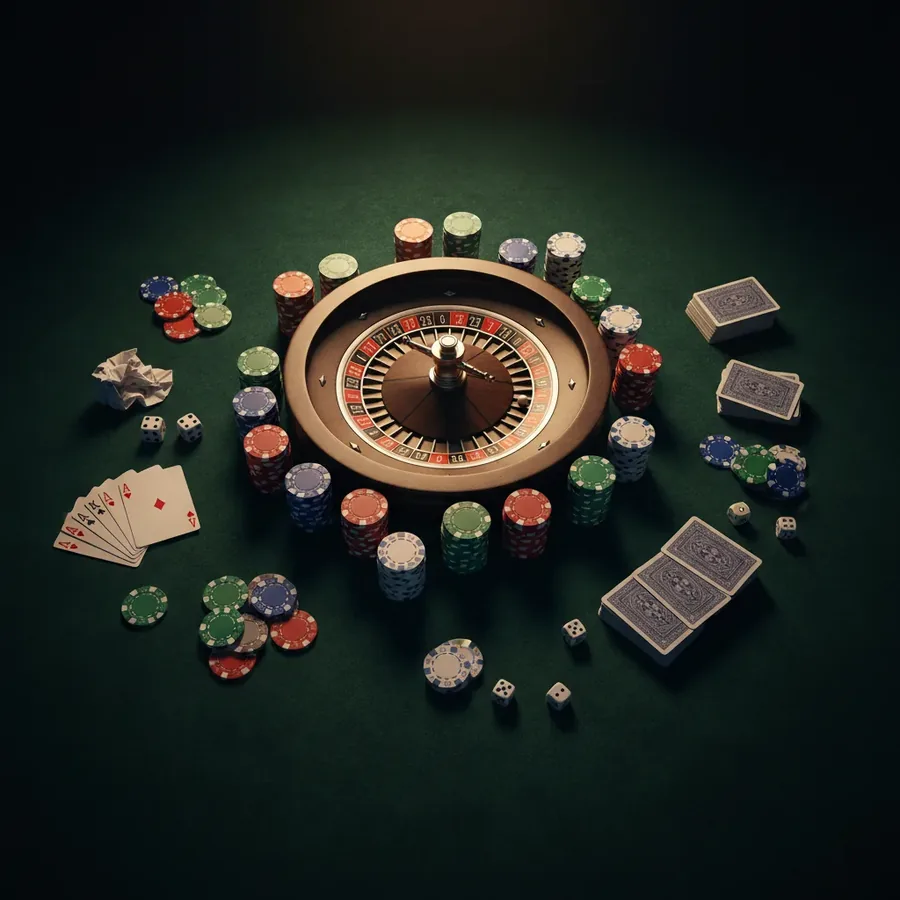
Dozen 2:1 Hits 12 of 37 Numbers
The Dozen bet in European Roulette, covering 12 numbers out of the 37 available sectors, pays at odds of 2:1. This bet has a house edge of 2.70%, consistent with all other bets on a single-zero roulette wheel. For example, betting on the first dozen (1-12) wins if any of these numbers appear.
While the Dozen bet offers a 2:1 payout and covers a significant portion of the wheel, its house edge remains at 2.70% on European Roulette. This means that for every 100 units wagered on this bet over the long term, 2.70 units are expected to be retained by the casino. Other outside bets like Red/Black or Odd/Even also pay 1:1 and carry the same house edge.
For players seeking to understand the mechanics of roulette, the Dozen bet illustrates how payouts are structured against the actual probability of winning. With 37 sectors, the true odds of any specific number appearing are 36:1, but the Dozen bet pays 2:1 for covering 12 numbers, thus creating the 2.70% house advantage inherent in European Roulette.
Keno and Bingo with RTP Between 92 and 95
This range indicates a higher house edge compared to most table games, making them potentially less favourable for sustained high-stakes play. For example, an RTP of 92% translates to a 8% house edge.
High rollers might find games with lower house edges more appealing for longer gaming sessions. If Keno and Bingo at this casino fall within the 92% to 95% RTP range, it implies a house advantage of 5% to 8%. This is significantly higher than the 0.28% house edge offered by Liberal Vegas Strip Blackjack, for instance.
Understanding the RTP is crucial for any player, especially those placing substantial wagers. An RTP of 92% means that, theoretically, 92 units are returned for every 100 units wagered over an extended period. This contrasts with games like French Roulette with La Partage, which boasts an RTP of 98.65%, offering a much lower house edge of 1.35%.
En Prison on Zero Gives Second Chance
French Roulette, incorporating the La Partage rule, offers an RTP of 98.65% on even-money bets, with a house edge of 1.35%. This rule stipulates that if the ball lands on zero, players placing even-money bets (like Red/Black or Odd/Even) have half their stake returned. This effectively halves the house edge on these specific bets to 1.35%.
The 'En Prison' or 'La Partage' rule significantly benefits players on even-money bets in French Roulette. When zero hits, half the bet is returned, a mechanism designed to mitigate the house's advantage. This feature contributes to the game's high RTP of 98.65%, making it a more attractive option for players who frequently wager on these outcomes.
For high rollers who favour outside bets, French Roulette with La Partage presents a compelling proposition. The ability to recover half of an even-money bet when zero appears reduces the effective house edge to 1.35%. This is considerably more favourable than the 2.70% house edge found on standard European Roulette wheels where no such rule applies.
Read Statistics of Last 500 Rounds Correctly
Interpreting game statistics, such as the last 500 rounds of play, requires understanding that these are historical snapshots and not predictive indicators of future outcomes. For instance, in Blackjack, a game with a low house edge of 1.85% (6 decks, 6:5 payout), past results do not influence the next hand's probabilities.
High rollers often analyse game trends, but it's vital to differentiate between statistical data and actual probability. Even in games with a house edge as low as 0.28% (Liberal Vegas Strip Blackjack with 3:2 payout), each round is independent. Observing the last 500 rounds of a slot game, for example, will not change its long-term RTP.
The RTP figures provided, such as 98.15% for Blackjack (6 decks, 6:5 payout), represent a theoretical average over millions of decisions, not short-term results. Therefore, while reviewing the last 500 rounds can be informative for understanding game flow, it should not be mistaken for a strategy to overcome the inherent house edge.
Game categories at a glance
| Category | Examples | Stakes From | Highlight |
|---|---|---|---|
| Slots | Rise of Olympus, Big Bass Bonanza, Dead or Alive 2 | 0,10 EUR | thousands of titles |
| Table games | Roulette, Blackjack, Baccarat | 0,50 EUR | classic rules |
| Live casino | Mega Wheel, Infinite Blackjack | 0,20 EUR | real dealers |
| Jackpot games | Mega Moolah, Divine Fortune, Age of the Gods | 0,20 EUR | progressive pools |
| Instant games | Aviator, Plinko, Mines | 0,10 EUR | fast rounds |
| Video poker | Jacks or Better, Deuces Wild | 0,25 EUR | strategy based |
Craps Odds Bet with 0 Percent House Edge
The Craps Free Odds bet offers a unique proposition by providing a 0.00% house edge on the odds portion of the wager itself. This exceptional feature allows players to bet on the true probabilities of the dice roll. When combined with a Pass Line bet, the overall house edge is reduced to 0.37%, making it one of the most favorable bets available in the casino.
This bet is only available in conjunction with a Pass Line or Don't Pass Line bet after a point has been established. The multiplier for the Free Odds bet can vary, with a 3-4-5x system being common. For example, with a point of 4 or 10, the payout is 2:1; for a point of 5 or 9, it is 3:2; and for a point of 6 or 8, it is 6:5.
For high rollers, this translates into a significant reduction in the casino's inherent advantage over extended play. By strategically placing Free Odds bets, players can effectively minimize the house's long-term profitability. This bet represents a rare opportunity to play a casino game where the house has no statistical advantage on a portion of the wager.
Table Games Often Count Only 10 Percent
When engaging with casino bonuses, players should be aware that table games typically contribute only 10% towards fulfilling wagering requirements. This means that for every €100 wagered on a table game, only €10 will count towards clearing the bonus. This contrasts sharply with slot games, which usually contribute 100%.
For example, if a welcome bonus has a wagering requirement of €2,000 and a player focuses solely on table games, they would need to wager €20,000 to meet this requirement (€2,000 / 0.10). This significantly increases the time and volume of play needed compared to playing slots.
High rollers who prefer table games like Blackjack or Roulette may find it challenging to clear substantial bonus amounts. It is crucial to review the specific bonus terms and conditions to understand the contribution rates of different game types before accepting a bonus offer.
Pass Line in Craps: Process in Four Steps
The Pass Line bet in Craps is a fundamental wager where players bet on the shooter rolling a 7 or 11 on the come-out roll, or establishing a point that is subsequently rolled again before a 7. This bet offers a house edge of 1.41%, making it a relatively favorable option for players. The payout for a winning Pass Line bet is 1:1.
The process begins with the come-out roll. If a 7 or 11 is rolled, the Pass Line bet wins immediately. If a 2, 3, or 12 is rolled, the Pass Line bet loses (with 12 often being a 'push' in some variations, but not typically for the Pass Line). Any other number rolled becomes the 'point'.
Once a point is established (4, 5, 6, 8, 9, or 10), the shooter continues to roll. The Pass Line bet wins if the point is rolled again before a 7. If a 7 is rolled before the point, the Pass Line bet loses. High rollers might consider this bet as a foundational wager before exploring more complex bets like Free Odds.
Split 17:1 and Corner 8:1 in Payout Comparison
Within the realm of Roulette, different inside bets offer varying payouts and house advantages. A Split bet, which covers two adjacent numbers, typically pays 17:1. A Corner bet, covering four numbers in a block, pays 8:1. Both these bets are placed on the number grid of the betting layout.
These payouts are calculated based on the number of possible outcomes on the Roulette wheel. For instance, on a European Roulette wheel with 37 sectors, a 17:1 payout for a Split bet implies a theoretical return based on a 1 in 37 chance, but the house edge ensures it's less. Similarly, the 8:1 payout for a Corner bet reflects its coverage of more numbers.
Comparing these to other bets, such as an outside bet like Red/Black which pays 1:1, illustrates the risk-reward profile. While inside bets offer higher potential returns, they come with a lower probability of winning. High rollers might favour these higher-payout bets for their potential to yield significant returns on a single spin, understanding the associated risks.
Straight 35:1 Against the Chance of 1 in 37
A Straight bet in Roulette, which wagers on a single number, offers a substantial payout of 35:1. This bet covers one specific number out of the 37 available sectors on a European Roulette wheel (numbers 1-36 plus a single zero). The odds of hitting any single number are precisely 1 in 37.
The 35:1 payout is structured to appear to offer players fair odds, but the inclusion of the zero sector creates the house edge. In a truly fair system with 36 numbers, a payout of 36:1 would be expected. The casino retains a 2.70% house edge on all bets on a European wheel due to this mathematical structure.
For high rollers, the Straight bet represents a high-risk, high-reward proposition. While the potential for a massive return on a single number exists, the probability of winning is low. This type of bet is often favoured by players seeking thrilling, albeit statistically challenging, opportunities for significant wins.
Sic Bo Pays from 1:1 to 180:1
In Sic Bo, payouts range from 1:1 for basic bets like Small or Big, up to 180:1 for a Specific Triple bet. These odds reflect the varying probabilities of each outcome on the dice. A Specific Triple bet, for instance, has a significantly lower probability than a Big or Small bet. Consequently, the house edge on Sic Bo bets can fluctuate considerably, from 2.78% to as high as 18.52%.
The house edge for Sic Bo varies depending on the wager placed. For example, the Small and Big bets carry a house edge of 2.78%, while a Specific Triple bet has a house edge of 16.20%. Special bets like Any Triple offer a house edge of 13.89%, and a Two-Dice Combo has a 16.67% house edge. These figures highlight the importance of understanding bet mechanics.
For a high roller, understanding these payout structures is crucial for managing risk and potential returns. A 180:1 payout on a Specific Triple, while attractive, comes with a substantial house edge of 16.20%. Conversely, lower payouts like 1:1 on Small or Big bets have a more manageable house edge of 2.78%, which is more sustainable over extended play.
How Long Does a Roulette Round Take on Average?
However, the RTP for this game stands at 97.30% with a house advantage of 2.70%. This house edge applies uniformly across all bet types on the European wheel. The payout for a Straight bet is 35:1, indicating a significant return for a single number prediction.
The house edge in European Roulette is 2.70% across all bets, a consistent figure due to the presence of a single zero. Bets like Dozen or Column pay 2:1, covering twelve numbers or a third of the wheel respectively. Even money bets such as Red/Black, Odd/Even, or 1-18/19-36 also operate with this 2.70% house edge, meaning no bet offers an advantage.
For players engaging in high-stakes roulette, the duration of a round is less critical than the consistent house edge. A 2.70% house edge on European Roulette means that for every 100 EUR wagered, an average of 2.70 EUR is retained by the casino over the long term. This rate is applied regardless of the bet type, from a Straight 35:1 to a Dozen 2:1.
Dozen 2:1: Twelve Numbers, One Third Coverage
The Dozen bet in European Roulette covers twelve numbers, representing one-third of the wheel, and pays out at 2:1. This bet is one of many available on a wheel featuring 37 sectors, including a single zero. The theoretical RTP for European Roulette is 97.30%, leaving a house edge of 2.70% for the casino on all wagers.
Despite covering a significant portion of the roulette wheel, the Dozen bet is subject to the same 2.70% house edge as any other bet on the European layout. This edge is inherent in the payout structure, where a 2:1 payout for twelve numbers is mathematically balanced against the 37 possible outcomes. Other bets, such as Column bets, also offer a 2:1 payout.
For high rollers, a 2:1 payout on a Dozen bet represents a balanced risk-reward proposition within the context of the game's overall mathematics. While it covers more numbers than a Straight bet, the inherent house edge of 2.70% remains constant. This means that over extended play, the expected loss per 100 EUR wagered on any bet type is 2.70 EUR.
How Much Does One Mistake Cost in 100 Hands?
In Blackjack with liberal Vegas Strip rules and a 3:2 payout for Blackjack, the house edge is a mere 0.28%. This game features optimal rules such as S17, DAS, resplitting, and late surrender, contributing to its low edge. The standard deviation for this game is 1.15, indicating relatively low volatility per hand.
If a player makes a mistake in Blackjack that increases the house edge by 1.39%, for instance by accepting a 6:5 payout instead of 3:2, their RTP would drop significantly. A standard 8-deck game with a 3:2 Blackjack payout has an RTP of approximately 98.15%, but switching to 6:5 reduces this to 96.76%. This rule change can drastically impact outcomes.
Considering a high roller playing 100 hands with an average bet of 100 EUR, a single rule change costing 1.39% of the RTP could translate to a substantial difference in expected value. For example, if the house edge shifts from 0.28% to 1.67% (a 1.39% increase), the expected loss per 100 EUR bet would rise from 0.28 EUR to 1.67 EUR. Over 100 hands, this difference amounts to 139 EUR.
100 EUR bet, 50 rounds: the expected value
With a 100 EUR bet placed over 50 rounds of European Roulette, the house edge of 2.70% will influence the expected value. The RTP for this game is 97.30%, meaning on average, 97.30 EUR of every 100 EUR wagered is returned to players. The total amount wagered across these 50 rounds would be 5,000 EUR.
The expected value for a high roller betting 100 EUR per round for 50 rounds of European Roulette can be calculated by applying the house edge. A 2.70% house edge signifies that, on average, 2.70% of the total wagered amount is retained by the casino. Therefore, the expected retention over 5,000 EUR in wagers is 135 EUR.
This means that across 50 rounds of 100 EUR bets, the average player can expect to lose approximately 135 EUR due to the 2.70% house edge. The actual outcome can vary significantly due to the random nature of the game, but this figure represents the long-term statistical expectation for this betting scenario.
Contact
Live - online chat
Banking









Providers












Fast Slots Casino 2026